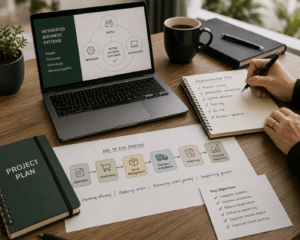

One of the questions I’m asked most often is, “What’s the difference between a Personal Assistant and the kind of business support you provide?”
It’s a fair question. While both roles help businesses stay organised and productive, modern business support often goes far beyond traditional administration. Understanding those differences can help you decide what type of support is right for your business.
Similar Foundations, Different Approaches
At their core, both Personal Assistants (PAs) and Virtual Assistants (VAs) help businesses stay organised, productive and focused.
A PA is typically employed directly by a company or individual and works as part of the internal team, often from the same office location.
A VA, meanwhile, is usually an independent business owner who provides professional support services on a flexible basis. Rather than being tied to one organisation, a VA can bring experience gained across multiple businesses, sectors and projects.
The skills may be similar, but the way the support is delivered can be very different.
Flexible Support That Grows with Your Business
One of the key benefits of working with an independent business support professional is flexibility.
Businesses can access support on an hourly, retainer or project basis, increasing or reducing that support as requirements change. This allows organisations to benefit from professional expertise without the long-term commitment and costs associated with recruitment.
For many businesses, this flexibility is invaluable, particularly during periods of growth, change or increased workload.
Remote Support with Real Business Relationships
The term “Virtual Assistant” sometimes creates the impression that all communication happens online.
While technology enables me to work efficiently with clients wherever they are, I firmly believe that relationships remain at the heart of effective business support.
Alongside regular communication through email, telephone, video conferencing and collaboration tools, I frequently meet clients in person. Whether it’s attending project meetings, supporting planning sessions, meeting wider teams or simply catching up face-to-face, these interactions help build stronger working relationships and a deeper understanding of the business.
Being able to combine remote support with on-site collaboration provides clients with flexibility while maintaining a personal connection.
Business Support That Goes Beyond Administration
Perhaps the biggest difference between traditional administrative support and modern business support is the breadth of services available today.
Administrative support remains an important part of what I do. However, my role often extends beyond day-to-day administration to become a trusted source of business support, project coordination and operational assistance.
Depending on the needs of each client, my support may include:
- Executive & Business Support
- Project Management & Coordination
- Operational Support
- Process Improvement & Documentation
- Systems & Workflow Management
- Stakeholder Communication
- Event Planning & Delivery
- Fundraising Support
I particularly enjoy helping businesses bring structure to projects, streamline processes and ensure important initiatives continue moving forward.
For many clients, the value isn’t simply in delegating tasks. It’s having access to an experienced professional who can provide practical support, problem-solving and an objective perspective across different areas of the business.
A Fresh Perspective and Diverse Experience
Another advantage of working with an independent business support professional is the breadth of experience they bring.
Because I work with organisations across different sectors, I’m constantly exposed to new technologies, different ways of working and best practice. That means I can often suggest practical solutions and efficiencies that businesses may not have identified from within their own organisation.
That external perspective can often be just as valuable as the day-to-day support I provide.
For one client, my role started with diary management and meeting coordination. As we worked together, I became involved in project planning, documenting processes and supporting operational improvements. Over time, as I developed a deeper understanding of the organisation and its priorities, my role naturally evolved to support a wider range of projects and operational activities.
Which Option Is Right for Your Organisation?
Choosing the right support depends on the needs of your organisation, the level of flexibility you require and the expertise you’re looking for.
If your organisation requires dedicated in-house support every day, employing a Personal Assistant may be the right solution.
However, if you’re looking for flexible business support, specialist expertise and someone who can step in to support projects, operations or business growth when you need it, outsourcing to an experienced business support professional can provide a highly adaptable solution.
Professional business support is about far more than completing administrative tasks. It’s about providing reliable, flexible support that helps businesses save time, improve efficiency and focus on what they do best.
After all, the right support doesn’t just help you do more—it gives you the freedom to focus on growing your business.
Could Your Business Benefit from Professional Support?
Every business reaches a point where trying to do everything yourself begins to hold you back.
Professional business support isn’t about handing over your business. It’s about gaining a trusted partner who helps you stay organised, keeps projects moving and gives you more time to focus on growth.
If you’re ready to spend less time managing the day-to-day and more time moving your business forward, I’d love to have a conversation about how I can help.